Showing posts with label lesson ideas. Show all posts

March 18, 2014

Unpacking "Grown Up" Poems in the Classroom

Does your district use the MAP test?  We take this computer-based test three times a year in math and reading.  The test gets easier or more difficult based on student responses, and students are expected to make growth throughout the school year.  Once kids start scoring in the top 10 or 15 percentiles, the questions can be suuuper difficult.  My kids' have been asked to read Shakespeare, Poe, and any number of difficult poems.  Because our literacy series is definitely on the light side (and that's an understatement) when it comes to poetry, my team tries to supplement it in as a shared reading activity every other Friday or so.  This year, I made it a goal to use as much classic poetry as I can--"grown up poems" I call them--because the kinds of poems the kids see on MAP tests and the kinds they need to be able to read to meet Common Core Standards are definitely not the cutesy ones about leprechans or school buses I may have used with students in the past.  Don't worry, we are still reading plenty of Shel Silverstein and Jack Prelutzky, but this year my students have been exposed to Poe, Wordsworth, Dickenson, and other classic poets.  

The goal of sharing these heavy poems with my third and fourth graders is not that they can demonstrate complete comprehension--some of the poems we've read I first read in my high school or college literature classes!  Instead, I hope to show my students that they don't need to be intimidated by tricky poems.  We read with the goals of visualizing what the poet is describing and identifying the types of figurative language used by the poet.  When given a smaller purpose, my students have found that they can attack the poems and begin to understand pieces of them which, for an 8 or 9 year old, is definitely a great step into the world of poetry.  

When we were working on personification, I shared the poem "I Wandered Lonely As a Cloud."  We did a class close read, reading the poem a few times together for different purposes.  First, I had the kids listen for the rhyme scheme.  Then, they listened to one stanza at a time with the purpose of visualizing.  We did Turn and Talks to share which parts we were able to visualize.  The kids realized when they broke it into bite-sized pieces, they were able to better understand the poem.  (This was definitely all guided, btw!!)  
After reading the poem together a few times, I reviewed personification and modeled identifying an example in the poem.  I then gave the kids copies of the poem, highlighters, and had them work in pairs to reread the poem a few more times, looking for more examples of personification.  They also hunted for similes and imagery, two other literary devices we'd learned earlier in the year.  The kids marked the figurative language and coded the text.  We then came back together as a class, and the kids shared the examples they'd found, underlining and circling them on the board.
This lesson had a few goals--to give my students practice at identifying examples of figurative language in a quality text, and to help my students become comfortable with unpacking a high-level poem.  My hope is that not only will they be less intimidated when they encounter poems on standardized tests, but that they will see the beauty in poetry from a young age and be less intimidated by poetry their whole lives!

February 13, 2014

Picture Prompt "Scoot" in Writing Workshop

I have a fun writing workshop lesson to share today!  We just wrapped up a never-ending persuasive/argument writing unit in my classroom, and since then, I've noticed my kids have been a little stuck when it comes to writing.  They are burned out and out of ideas!  To help them get their writing spark back, I've been doing some fun "Ideas" mini-lessons.  These are always my favorite kind--the ones that get the kids super excited about writing and that may lead to a published piece...or maybe not.  Last week I pulled out my file folder of writing pictures.  I gathered a bunch of magazine pictures last summer and laminated them.  Early on in the year, I modeled how to write from a picture, and it was a hit.  But they've been in the cabinet since September, so it was time to dust them off!
This time, though, we used them to play "Scoot."  You know, when you have the kids scoot from desk to desk and complete a short task at each one?  This time, I put a picture on each desk and had the kids scoot from desk to desk, completing a quick write at each one based on the picture.  (Word to the wise: If you do decide to use Scoot in your classroom, make sure you practice the scoot rotation at least 3 times before actually starting!!  Will save you a ton of headache...)  Anyways, once we'd practiced the rotation, I set a timer on the screen for a minute and we got started!
My kids completed 4 or 5 quick writes before we ran out of time.  They had a blast, and the next day, I had them choose one of the stories they'd started to continue writing about.  If my goal was to reignite our writing enthusiasm, I'd say this activity was a success!

September 26, 2013

Making Inferences about Trash!

I have one more fabulous lesson from Comprehension Connections to share with you today!  This one I squeezed into an extra chunk of time I had a couple weeks back when a handful of my kiddos were testing and I had several others joining me from other rooms.  It was the perfect lesson for a mixed bag like that, but I wish all my homeroom kids had gotten to be part of it!  I will have to remember to teach it to the whole class next time as part of my beginning of the year literacy activities.

I have loved all of the lessons I've taught from this book, but this one is probably my favorite (or at least tied with visualizing!).  Once again, I want to be clear that this lesson is in NO WAY my original idea--100% of the credit for the idea goes to Tanny McGregor, the author of Comprehension Connections.  It is too fun not to share with you though!  I started the lesson by telling my class about the [[ficticious]] "mysterious new neighbors" who just moved in down the hall from me.  I told them how I want to get to know them better, but they always go right in their apartment and shut the door, and they don't come out very often.  I tell them that I did something crazy...I stole their garbage!

I them produced a large white trash bag--the kids were completely floored and completely engaged.  Lots of "ewwww!"s going around.  I told them that I was going to be like a detective and that they would get to help me look for clues in the garbage to tell me more about my neighbors.  We examined the items one by one.  Here's what I threw in the bag:
  • An empty gatorade bottle
  • An IKEA catalog
  • A ticket stub from the science museum
  • An empty mascara tube
  • An empty tea bag wrapper
  • An empty box of hot chocolate mix
  • An empty box of blueberries
  • A public transit card
  • A gift bag
  • An empty bottle of allergy medicine
We went through the items and I asked the kids what they know about each.  For example, we know people drink Gatorade when they exercise or work out.  Then, we used what we know to make inferences about the people.  The kids inferred that my "neighbors" like to exercise.  They also connected the Gatorade to the blueberries--clearly they like eating fruits too, so both of these things show that they like to be healthy.  We recorded the inferences on the chart below.
It was a great opportunity to get the kids talking to each other and thinking about reasonable and logical inferences.  I shared these sentence frames with them to help guide their thinking.
After the activity, I had the kids draw their own trash bags with items that a "nosy neighbor" like me might find if they stole their trash.  They they wrote about the items and what others would be able to infer about them based on the items.  Example: 
Obv I did this lesson when I had a bad cold...
 If I taught the lesson again, I definitely would have spent more time on the writing piece and modeling how to really go the extra step with the items they chose.  Many got stuck on food items--it took some prompting to think creatively about what items might end up in their trash that would tell about them.


What fun ways do you introduce the kids to making inferences?

September 16, 2013

Teaching Kids about SCHEMA!


*Hey guys!  Don't forget to check out my 31 bags fundraiser for Autism Speaks!  No one has entered yet, which means that you have a VERY GOOD chance of winning a 31 bag in exchange for a tiny $5 donation to Autism Speaks!!  Seriously, that's an amazing deal AND you're helping a good cause!  Win-Win!

Coming to you with another great Comprehension Connections lesson today!  Last week I shared about Tanny McGregor's awesome lesson on Visualization.  I can't wait to tell you about another great lesson I borrowed from her book, this one focusing on teaching Schema.
To get the lesson started, I show a simple T-Chart.  I tell the kids that when I write the label on the 1st column, they will have 1 minute to shout out any thing they know about that topic, or thoughts that pop into their head.  I chose "Great America," our nearby Six Flags amusement park, for this because I figured most kids would have some schema about the topic from commercials even if they had not been.  I wrote down the words and phrases kids shared until the 1 minute timer went off.

Next, I wrote the name of the next column.  In the book, McGregor chose an obscure town in Florida with a unique name that she had schema about.  I chose Marseille, France, a town I was able to visit on an exchange trip in high school.  Obviously, the kids had pretty much no schema about this topic!
After the minute passed this time, I asked them why they had less to say about Marseille.  We processed for a minute, and then I wrote the word "SCHEMA" in caps down the left side, as McGregor instructed.  I explained what schema is, and explained why schema made the difference.

The thing that makes Comprehension Connections lessons really great is that they all have a concrete link--in this case a lint roller.  I showed it to the kids and told them that our brains are like this lint roller--anything we come in contact with gets stuck in our brains and becomes part of our mental filing cabinets, our schema!  I then shared the slips of paper I'd prepared--on each one I'd written someone either unique about me or that I'd experienced.  I read them to the kids and modeled dragging my lint roller over the slips.  Obviously, they stuck!
I talked with the kids about how we are all so very unique--there is no one in the world with the exact same experiences as each one of us.  That means our schema is unique too!
Just like in the Great America v. Marseille activity, when we read, it's our schema that makes a difference.  Schema allows us to make connections as we read.  Next, I revealed the connections anchor chart modeled after McGregor's that shares the different levels of connections as well as sentence frames.  I had created the bones in advance, but we added in the details in pink together.
Last, I kept the chart displayed as I read aloud from a picture book and asked the kids to share their connections with their Turn & Talk partner and the class.  A great beginning of the year literacy lesson!

September 9, 2013

Teaching Students to Visualize While Reading

Hi guys!  Hoping to get back into some regular posting this week--last week things got away from me!  Teachers, you know how it is.  Teachers who are also marathon training--you really understand!!  (Seriously, all of you who are both those things AND moms on top of it, I don't know how you do it!)  Anyways, to start the week off on the right foot, I thought I'd share a lesson I did during our second week of school.  I absolutely LOVED it!  

Since we weren't beginning our regular literacy series (Treasures) until the second full week, I decided to spend our literacy time during that first full week teaching reading strategies (and of course building stamina in the Daily 3!).  One lesson I taught was on visualization, one of the most important strategies IMHO.  We all know that if kids aren't visualizing, they just plain aren't comprehending!  I think talking about visualizing with kids is a great way to help them monitor whether or not they are comprehending.  I borrowed this particular lesson from Comprehension Connections by Tanny McGregor, an uhMAZING book that links reading strategies to concrete objects and activities.  
Check it out on Goodreads here!

I started off seating the kids in a big circle on the carpet.  Each student brought their literacy notebook and a few markers.  The kids divided their notebook page into 6 sections, numbering each one.  I then started passing around paper bags, inside each of which was a "mystery object."  Students were instructed to reach into each bag without looking, feel the object inside, and create a "mental object" of the object.  Then, they passed the bag on and drew their visualization.  The kids had an absolute blast doing this!
6 mystery bags!
Student drawings

After the bags had made it all the way around the circle, I revealed the objects.  We talked about their mental images and compared them to the actual objects.  
This led us into an awesome discussion about Schema and its role in visualization.  Students were more easily able to visualize the stone when they felt it because they were more familiar with stones than some of the other objects.  Also, most shared that they pictured a yellow tennis ball when they felt that object because they had seen yellow tennis balls before.  Blue tennis balls weren't part of their schema!

Next, I shared this anchor chart with the kids that I created based on the sample in Comprehension Connections.  We talked about the language and practiced using the sentence frames.
I then took a quick brain break before regrouping the kids back at the carpet--this lesson was too long for continuous concentration from their little brains!!  I had the kids sit facing our interactive board, again with their notebooks and markers/pencils.  I have a few different powerpoints prepared of children's books with the text only typed into slides--no pictures.  These work wonderfully for visualization!  Also, they're perfect for reading shared text, as the words are so big on the screen.  The book we read was The Wednesday Surprise by Eve Bunting.  As we read, I stopped for the kids to take "picture pauses," aka sketch their "mental images."  I also used the sentence frames to model my thinking about my visualizations and encouraged the kids to practice sharing their thinking through Turn and Talks.  This book worked great because there were some scenes where the narrator describes preparing for a party--a perfect way to tie in the fact that our schema about parties we've experienced and seen influences the way we will visualize a party!
One student's collection of "picture pauses" for The Wednesday Surprise

I revisit visualization all the time, but one spot in my day that I make sure to touch on it is during read aloud.  Since their eyes are not on a text, I encourage my students to close their eyes and really create that "movie in your mind" that is visualization.  We'll even share what color clothes we visualized the characters in.  Sometimes when we have a few extra minutes, I'll send the kids back to their seats to "capture what they visualized in their notebooks" using pictures and descriptive sentences.  The best part is that the kids LOVE it.  

Hope you will try this lesson in your classroom!  

What are some of your favorite literacy lessons to teach early on in the year?

August 26, 2013

What I Do the First Week of School

If you had a chance to read my post on Friday, you'll know that I am officially one week into the school year.  Not only did I survive, but the kids did too!  I wanted to take some time today to share some of the lessons I typically teach during the first week or two of school.  The most important things to me in these crucial weeks are building our classroom community and teaching those oh-so-important routines.  Routines are the MOST important part of classroom management IMHO!  Read a list of some of the routines I make a point to teach these first weeks here.

Anyways, I thought I would just share a list of some of my favorite beginning of the year lessons and activities...

Starting Out the First Day
The very first thing I do on the first day is have the kids just drop their supplies on their desks and join me at the carpet.  Here, I teach them our opening tradition.  We listen to (and sing!) a song--this year our first opening song is "Brave" by Sarah Barielles--while doing some sort of clapping routine to the beat.  Then, I teach our opening greeting (which I can now do in ASL!  hooray!).  Once we've had a chance to practice that a couple of times, I explain expectations for transitioning from the carpet to the desks.  Since I move back and forth between both many times a day, it's important to teach this transition!  We practice at least once or twice before heading to desks and labeling, organizing, and putting away supplies.


Since the first days can involve a lot of routine practice and presenting of information, I try to alternate each "seated activity" with some sort of game or movement break.  Those little bodies aren't used to sitting for very long yet!  These things games can be complicated or as simple as "touch all four walls and get in six high-fives."  

Getting to Know You + Team Building Activities
One of my favorite activities for the first day is one another teacher on my team shared last year.  We read aloud the story The Dunderheads--have you read this one?  It's about a class of misfits, each of whom has some crazy unique talent or gift.  They don't fit in at all, but they work together to combine their gifts and conquer a challenge during the story.  While reading, I kept a chart of each student's unique talent, and afterwards we talked about how this is like our class--each of us has something different to offer, but together we can do anything!  Each student took some time to write some of their special talents down on strips of paper, and we stapled them together to create a chain that I displayed in the classroom all year.


Last year's chain
Since I am in a multi-grade classroom, I couldn't repeat this same activity this year (half of the kids would have already done it!).  Instead, I decided to read aloud The Important Book.  After reading, we talked about the things that are important about each of us.  We drew symbols representing each of these things on a net of a cube, and then cut and folded the cubes.  An art activity like this on the first day is a great way to both get to know the kids AND start teaching your expectations for work time.
source
I also do a lesson called "Home Court Advantage" every year with my class.  This is a lesson I learned at my Quantum Learning training, and I love how it builds my classroom community.  I first start by having the kids visualize that they are on a pro-sports team--this year I chose the Chicago Blackhawks because we won the Stanley Cup here in Chicago this summer (yay!).  I had them picture looking out at the fans, all in Blackhawks colors, cheering for them.  I had them picture looking down at the ice with their mascot painted on it, and at their teammates, all supporting each other in matching jerseys.  We thought about how the teammates cheered and high-five-d and hugged when they scored goals, and how when they missed, their teammates encouraged them.  After visualizing all of this, we talked about what Home Court Advantage means--statistically, players are more likely to win on their home court because of three things: Safety, Support, and Belonging.  We talked about how this classroom is their home court, and we brainstormed ways we can contribute to the home court advantage in the classroom by helping classmates feel safe, supported, and like they belong.
Building Instructional Routines
Literacy
On day two, I usually start my first Daily 5 lesson--introducing Read to Self and beginning stamina building.  Read more about this here.
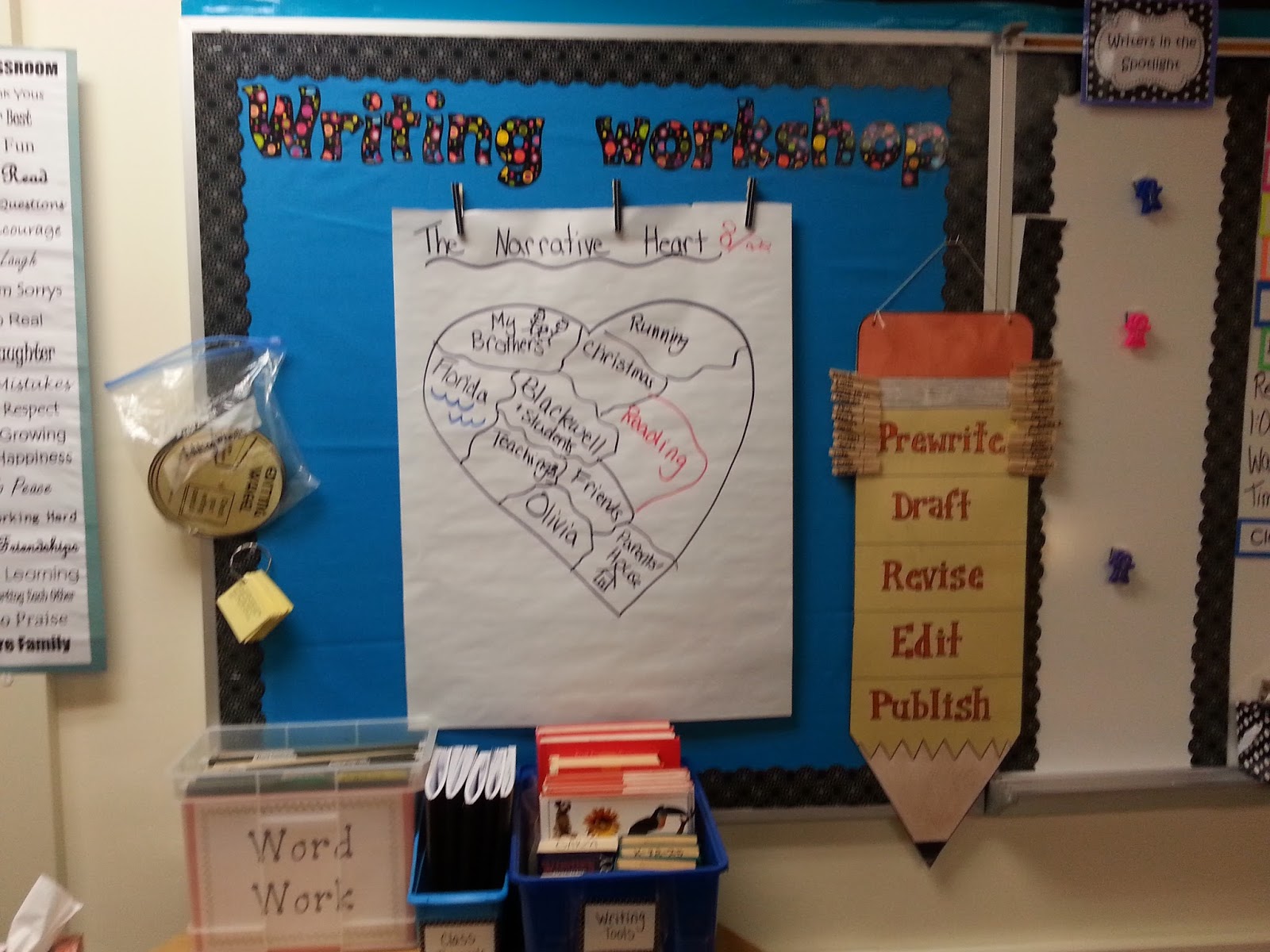
The first week, I also introduce our Writing Workshop routine.  This year, I read aloud The Best Story Ever as a perfect segue into the Narrative Heart lesson.  I'm sure many of you are familiar with this lesson--we draw hearts in our writing journals and fill them in with all of the people, places, activities, and memories that are in our hearts.  Then, I have students pick something from their heart to write about in their journal.  This lesson is a perfect starting point to writing workshop.  It gives students a place to draw ideas from for future lessons, and it also introduces the mini-lesson, writing time, sharing time structure of Writing Workshop.
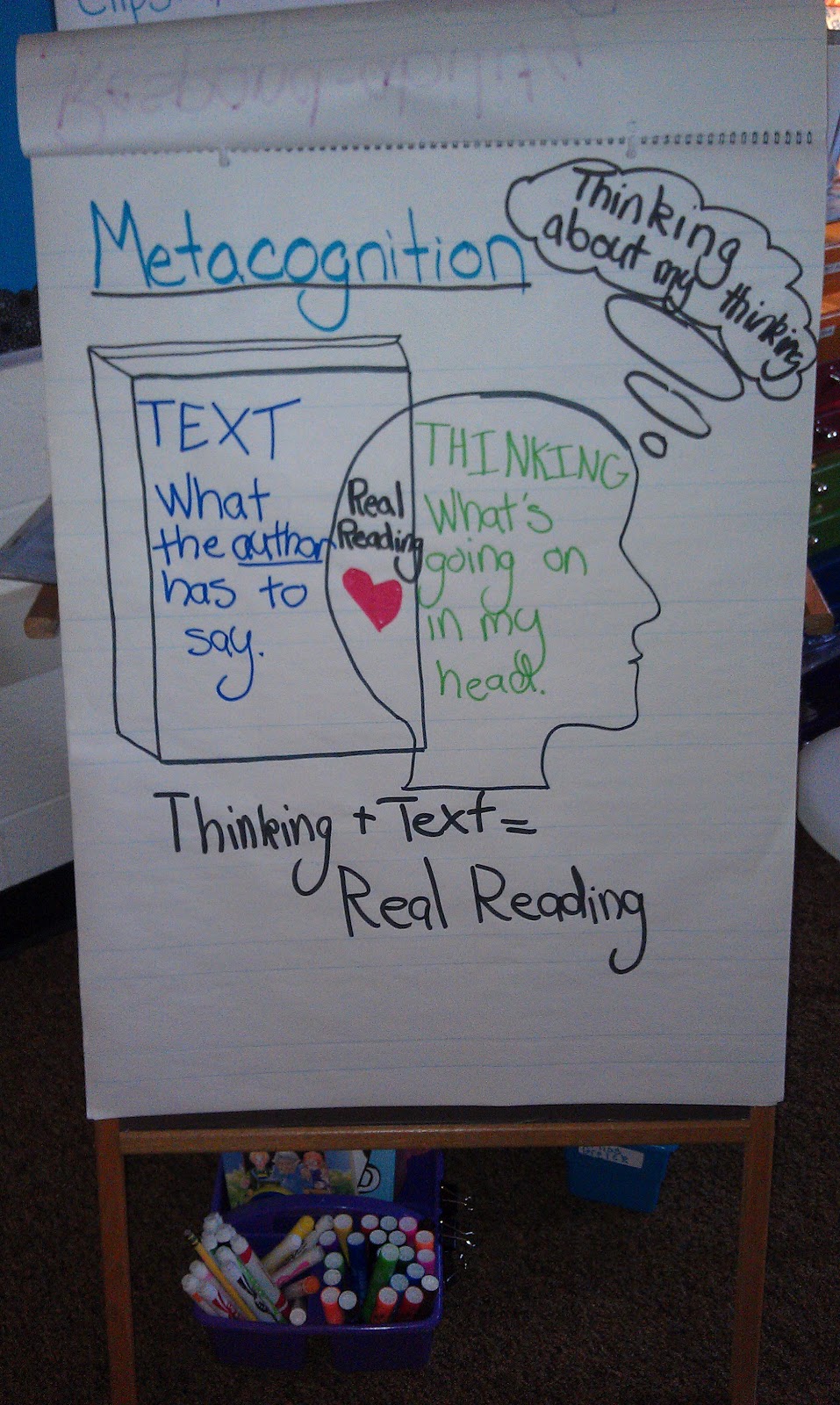
Before we start our literacy series, I like to also do some lessons about things that good readers do--visualizing, making connections, etc.  The first one I start with is a lesson on Metacognition that I got from the book Comprehension Connections.  I model reading a very challenging text and talk about how even though I was reading the words, I was actually "fake reading" because I wasn't thinking.  Then we practice think alouds while reading a picture book together.  This year, I chose The Boy who Grew Flowers.
Math
We will dive into our math curriculum starting week two (today actually!), but we did our first classroom switch for math on Friday.  I introduced expectations for this transition and our math opening routine (another song) to my math class, did my very best to learn a few names, and then started introducing them to the Guided Math routine.  Read more about how I run Guided Math here.  This year, I had the kids practice transitioning from desks to carpet with their white boards, markers, and erasers.  We also practiced turns and talks with the kids "Brain Buddies."  Once at the carpet, I shared our math expectations with the kids.  Normally I would make an anchor chart of these on chart paper, but I decided to make them in ActivInspire, our interactive board program, so I could try revealing them one at a time.  With the new emphasis on critical thinking and "rigor" in the Common Core, I wanted to make sure the kids understand what it means to justify their solutions and critique those of their neighbors.
After attending an awesome math workshop with Greg Tang last year, I decided to use one of his great online (free!) picture books, The Grapes of Math, as another part of our shared lesson.  This book does a great job of encouraging mathematicla thinking and showing that there are many ways to solve a problem.  Kids worked through the problems with their Brain Buddies and shared their solutions.
After reading a few pages from the book, I wanted to review a simple math game with the kids from our Everyday Math series to make sure that when we start our guided math groups on Monday, they will have an activity to work on when they are independent.  I reviewed the rules to Addition Top-It, a game frmo the third grade curriculum, and gave them time to play with their brain buddies.  Easy peasy!

What are some lessons you love teaching the first week of school?

September 5, 2012

"Ideas Lessons"--Getting Started in Writing Workshop

One of my favorite things to do at the beginning of the year is lay the foundation for Writing Workshop in my classroom.  I always spend the first weeks of school doing a bunch of fun "Ideas" lessons--lessons that are designed to spark an idea for writing.  The kids start a bunch of different pieces in their Writing Workshop journals, add a ton of things to their "ideas list," and basically get bitten by the writing bug.  Taking the time to build the writing community is so important--it helps get the kids excited about writing, but equally as importantly, it gives the kids so many ideas that they can never say, "But I don't have anything to write about!" later in the year during Daily 3 or Writing Workshop.

One of our first Writing Workshop lessons was the "Narrative Heart," which I *think* is from one of Ralph Fletcher's books, but I can't remember where I first heard of this one.  I model writing all of the things that are in my heart on chart paper and the kids do the same in their journals.  Then, they can write a story about any of those ideas when they are stuck and don't know what to write about!  My narrative heart:
Some highlights of my heart: my niece Olivia, my old and new schools, memories from going to Michigan every winter with my dad to cut down a Christmas tree, eating dessert, my high school friend Alex (all of my friends, of course, but I picked one for an example!), and of course my childhood teddy bear Fred. :)
4th grade narrative heart :)
We also read the adorable book Wilfrid Gordon McDonald Partridge by Mem Fox, a perfect mentor text for writing about memories using artifacts.  The kids all brought in artifacts, and I brought in my first half marathon medal.  I told them my "memory story," then we all wrote about our artifacts.  Last, the kids shared their writing with partners.  

Another favorite lesson I do every year is using Desert Voices by Byrd Baylor, a book of poems written from the points of views of desert animals.  After reading the book, the kiddos brainstormed animals that they would like to write from the point of view of... 
This lesson usually gets some fun results!
Because I love both Patricia Polacco and my "rotten" older brothers, I always love reading aloud My Rotten Redheaded Older Brother at the beginning of the year.  This year I used it in literacy to introduce character traits and story elements, but then I hit it again in writing workshop.  I read the book and then tell the kids a story about the most rotten thing my older brother ever did--I was about 8, and he was yelling and screaming and generally making my life miserable while in charge one night when my parents were out.  He decided to steal my teddy bear, put him on top of our ceiling fan, and threaten to turn the fan on and chop him to bits unless I stopped crying.  Sibiling love. :)  Anyways, after I share my "rotten sibling story," I challenge the kids to write theirs...
The last "ideas" lesson I want to share was a new one for me this year, an idea I got from the Being a Writer 4th grade curriculum.  I read the beginning of the picture book Gorky Rises aloud to the class.  It's not a favorite book of mine, but the premise is that the kid mixes a ton of different things together and makes a potion that makes him fly.  I only read the first few pages, then brainstormed with the kids what ingredients they could mix in a potion and what the potion would do.  They absolutely LOVED this lesson, and many of them worked on that story all week long!  

 All in all, after two weeks my kiddos are already hooked on Writing Workshop and ask to do it multiple times during the day.  Score!  (Now I just have to teach some writing conventions...god help us all!!!)

June 25, 2012

Writing Workshop: The Recurring Line

This is a lesson I borrowed from CRAFT by Ralph Fletcher, my favorite go-to writing mini-lesson book.  When I was first learning about Writing Workshop at a seminar, the presenter said that initially, teaching good mini-lessons is more important than making sure the kids are using what you've just taught in their writing right away.  Gradually, over time, she said, you'll start seeing the techniques you've taught pop up in their projects and drafts.  This concept is different than what I'd initially thought about teaching writing, but after two solid years of using the Writing Workshop model, I have to say that I agree.  There are some lessons I teach, like good beginnings and endings or transition words, that I make sure the kids are practicing right away.  Those lessons have an important purpose in the context of a writing project that we are all working on.  But other times, I just want to teach a lesson on a quality technique that isn't essential, but will help elevate their writing to the next level.  When I'm looking for something like that, I turn to CRAFT.

This lesson is called "The Recurring Line."  To teach it, I used three mentor texts: The Doorbell Rang, The Giving Tree, and Chicken Sunday.  After each story, we identified the recurring line and the author's purpose for including it.  In The Doorbell Rang, a preschool book, the recurring lines just add a pattern to the story, making it easy for little kids to pick it up.  Simple.  In The Giving Tree, the recurring line ("And the tree was happy.") embodies the story's theme--the tree is happy when he is helping the boy and when he is a part of the boy's life.  In Chicken Sunday, the recurring line ("A voice like slow thunder and sweet rain") describes an important, memorable quality about an important character.  After reading that story, we talked about how the author wanted to leave a lasting impression of that character in our minds, and how her voice was something special about her.
The kids loved the lesson (they love any lesson with picture books!), and even though I didn't see recurring lines pop up in their writing much, I'm confident that if I taught it again next year and extended it with modeling using a recurring line in my own writing, some of my little writers will catch on.  It doesn't have to be every single student, but if one of my little writers picks up a quality writing technique from a mini-lesson, I consider it a success. :)

May 31, 2012

Writing Workshop: Conflict + Resolution

I love teaching all of the writing genres through Writing Workshop, but my favorite part of the year is Story Writing.  My kiddos write stories all year long when we aren't focusing on one of the Big Three genres (exp, narr, pers), but I like to take a few weeks in winter or sprint and spend some time working on writing quality stories--you know, that actually have a plot and don't end with "to be continued..."!  In reading some of the kiddos' writing this year, I decided that the most important thing for us to nail down in our stories was that they needed a clear conflict and resolution.  Sounds obvious, but I can't tell you how many stories I've read in my short time as a teacher that have neither.

During Day 1, I reviewed the term "conflict" with my students and pulled out a bunch of picture books and novels we'd already read together this school year.  Quickly, I held them up one at a time and had the kids identify what the main conflict had been in the book.  We also differentiated the difference between the "Big Conflict" that guides the plot, and smaller conflicts that make up the rising action.  For example, in My Rotten Red Headed Older Brother by Patricia Polacco, although during the story Tricia eats a bunch of sour rhubarb and falls off a merry go round, the main conflict is that she and her brother do not get along.  The kids did great with this, and we recorded several of the conflicts on an anchor chart.  Next, we brainstormed some possible conflicts to include in their writing.  I reiterated to them that a conflict isn't always a fight--it might be a big problem, it might be a little problem, or it might just be a goal.  Then, during Writing Workshop, I went around to each student and briefly (I mean BRIEFLY) checked in with them to ensure that their story had a clear conflict.  I recorded the title of their project and the conflict in my notebook.
On Day 2, we went back to those stories and the anchor chart and briefly identified how each conflict was resolved.  We added the resolutions to the anchor charts, and I checked in with students again to see if they had a plan to resolve their conflict.  If they did, I recorded it, and if not, I starred their name in my notebook to remind myself to check in again in a few days.  I always do writing conferences during Writing Workshop, but I always seem to "miss" a student or two...what I mean is, I completely forget to check in with them, either because they are writing in some weird corner of the room or because my hands are full with ultra needy students, until the end of the project only to find that they are completely off track.  This was so helpful for me, and by the end of the drafting stage, all of the kids had stories with a clear plot, including conflict and resolution.

Next time I do these lessons, I will also include a day on climax.  It's something we've discussed at length in shared and guided reading, but I never taught the kids to build a "hot spot" into their writing... #keepsinmindfornextyear...

December 29, 2011

Author's Purpose (+ a vlog!)

Author's Purpose is one of those things that I think should be so gosh darn clear and easy, but that many of my kiddos still struggle with.  This year when I taught it, I added in some hand gestures and chants to help the ideas "stick" in their heads.  While my results still weren't 100% successful, the majority of my class really got it.  First, I started by telling a story about my crazy muddy trail (or any other humorous story).  Afterward, I asked the kids if I told them that story because I was trying to teach them something.  Hopefully they are all in agreement that no, that was not why I told it!  Then I ask if I was trying to convince them to think or do something.  Nope!  I share with them that I just told them that story because it was fun and I wanted to share it with them.  Then I share the author's purpose PIE anchor chart:
I keep it mostly blank at the beginning, and we add in different examples of each text as we discuss them.  Then, I teach the hand gestures for each purpose.  For that, I made this little video!  Okay, PUHLEASE don't make fun of me...I've never made a video for my blog before, but I couldn't think of any other way to share the hand gestures with you!  Here goes nothing...
I totally slipped into a "teacher voice" during that...I swear, it's involuntary.  Okay, you can stop laughing now.  Seriously.  I practice those gestures with the kids at least a couple times the first day and then throughout the week.  I heard once that in order to really cement something into the kids' long term memory, you have to review it once within 10 minutes, again within 24 hours, and again within 7 days.  10/24/7, MINIMUM.  Finally, after we've practiced the gestures, I share a bunch of articles I've pulled from kid-friendly magazines.  I'll just show it around, and then will read the beginning.  Kids will think about it, and then will respond with the gesture that matches the correct purpose.  After some practice with THAT, the kiddos break up into groups and work together to identify the purpose of another article.

After this introductory lesson, throughout the week in shared reading we read a variety of texts and, in addition to practicing other comprehension skills, work together to find the author's purpose.  

Do you use hand gestures to teach in your classroom?  I never did before this year, but our school is really working this year to boost engagement and hand gestures are an easy way to hook kids into lessons and then to help them really remember the content.

Any tips for teaching Author's Purpose?

December 13, 2011

Teaching About Theme

Psst!  You can now download a *free* poster-version of this anchor chart!  Visit my Teachers Pay Teachers Store here! (edit 10.6.13)

A few weeks ago, we took a two-day break from our core literacy series to spend some time studying Author's Message/Theme.  I love working on theme with the kiddos, and REALLY love teaching literacy with picture books.  Theme + Picture Books = literacy fun.  :)  Here's what we did...

First, I introduced theme by reading aloud "The Boy Who Cried Wolf."  After reading we talked about the reason this story was first written: What was the author trying to teach readers?  What message was he or she trying to get across?  I like using "The Boy Who Cried Wolf" because the message is SO obvious, even the lower readers can catch it!  I then share this anchor chart with them and go over the common theme topics and sentence frames.  
Next, we read Chrysanthemum by Kevin Henkes.  I ask the students to listen for how Chrysanthemum changes and what she learns throughout the story.  We then mark the "common topics" on the chart paper using post-its, and I model using these topics to state the theme.  (We practice writing the theme as a complete sentence, not just a broad theme like "hope" or "friendship."  For example, the theme we developed for Chrysanthemum was, 'It's important to accept and celebrate who you are.'"  Note: It's important to clarify that the theme should not be specific to this book.  I try to be really clear that the theme of Chrysanthemum is NOT, "Unique names are special."  

After working with Chrysanthemum as a class, the kids broke up into small groups of 3-5 students.  Each group was given a picture book and a piece of chart paper with an outline on it.  They read the book, wrote a brief summary, then worked together to develop the theme.  Finally, they recorded it all on chart paper and shared with the class! 
This group read and responded to The Brand New Kid by Katie Couric--cute book!
Other great books for teaching theme:
  • Smoky Night by Eve Bunting
  • Terrible Things by Eve Bunting
  • A Bad Case of Stripes by David Shannon
  • Mr. Peabody's Apples by Madonna
  • The Wump World by Bill Peet
  • Thank You, Mr. Falker by Patricia Polacco
  • Weslandia by Paul Fleischman
  • The Frog Prince, Continued by Jon Scieszka

November 28, 2011

Division Fun...with cookies!

Do you hate teaching division?  For me, it is second only to fractions (aka my personal math teaching HELL).  My students really struggle with the concept of division at first because in general they are severely lacking in their number sense foundation, not to mention their basic facts.  To help ease into division, I like to kick off the unit with a fun, hands-on lesson each year featuring, wait for it, COOKIES!  Well, Cookie Crisp cereal to be exact.  Still good.

For this lesson, I give each kid a small cup of Cookie Crisp cereal, a dry erase board, and an expo marker.  I then read aloud the book The Doorbell Rang by Pat Hutchins.
source
In this simple picture book, kids have to continuously divide up a batch of cookies as more and more friends ring the doorbell.  We start with 12 "cookies" out.  On the first page, the cookies only need to be divided between two siblings.  We first divide the cookies, then write the division problem to answer the question, "How many cookies does each kid get to eat?"  12 / 2 = 6. Easy!  I pause after each page to have my kiddos solve the next division problem after more kids have arrived.
The kids love this amazing activity, and it is a great way to explain the concept of division with a real-life connection.  Everyone can relate to sharing something with friends!  After finishing the book, I have the kids take different numbers of cookies out to help solve other simple division problems.  It's also easy to make the connection back to multiplication at this point by skip counting each group of cookies to get back to the total.  

Oh the best part?  Afterwards you will likely have half a box of Cookie Crisp in your supply closet to help fight your after school munchies... ;)

September 13, 2011

Easy Writing Workshop Mini-Lessons!

Have you entered my giveaway for Chocolate #9 energy gel?  Go! Go! Go!


It's been awhile since I professed my love for Writing Workshop, so I think it's about time for a post!  I'll admit that Writing Workshop isn't going as smoothly in my class this year as last year, but I know every group of kiddos is different so I am trying to find a balance between patiently reteaching and in some cases adjusting my expectations.  This year I have a squirrely group, but I also have the IEP inclusion cluster--in other words, several of my kiddos either cannot focus long enough for 20 minutes of independent writing or just plain don't have the skills to write for 20 minutes without 1 on 1 assistance!  All of that aside, we have been making progress and working hard the past few weeks to lay that foundation that is critical for Writing Workshop.  I've been doing "ideas" lessons like crazy to get my kiddos writing about things they're interested in. Here are two that I especially love...

Quick Writes
This mini-lesson is perfect for when you're pressed for time and only have a few minutes to spend on the lesson portion of the writing block.  I start by setting the expectations for Quick Writes: Everybody writing as a group, 1-2 minutes, write the whole time without stopping.  I tell the kids that no matter what, we keep our pencils moving on our papers--the ideas will come if we keep going!  Then I give a few different prompts 1 at a time.  In the past, I've shown one and then immediately had the kids write about it, then shown another and followed with another quick write, etc.  At the end, I'd tell the kids to choose one of their quick writes to continue working on.  Last week I showed the prompts one at a time (slowly, pausing in between) and then told the kids to pick one to write about during our quick write.  <--I think this was a better fit for my current group of kids, as they would have been overwhelmed by several quick writes in a row whereas last year's group did great with it.
During the quick write, I ALWAYS write too.  I'll talk with the kids after about my own quick write experience, and ask them to reflect.  I'll ask, "How did it feel to write without stopping?  Did anyone get stuck?  Did anyone have ideas come to them when they just kept writing?" etc.  After the mini-lesson portion is over, I'll send the kids to their spots for the "writing time," and tell them to continue their quick write or work on another piece.  I use quick writes periodically throughout the year.  Sometimes I'll pause during a mentor text read aloud and do a quick write asking the kids to finish the story with what they think will happen.  Other times I'll give more free-thinking questions similar to those shown above.  I love how versatile this mini-lesson is!

Mentor Text: Thank You, Mr. Falker

If you haven't read Patricia Polacco's Thank You, Mr. Falker yet, drop everything and get yourself to your nearest bookstore.  You may need kleenex.  This is seriously one of my all-time favorite books, and it makes a perfect writing workshop mentor text for early in the year. 
In this beautiful book, main character Tricia (based on the author's own experiences!) struggles her entire childhood with reading and math.  Every year in school she watches the other kids advance in their readers and yet she still cannot make sense of the letters and numbers on the page.  Tricia is terribly bullied and just plain miserable.  I get choked up every time I read it aloud.

Don't worry, the story has a happy ending, but as part of a mini-lesson, I pause on a particularly intense page that shows Tricia crying with the cruel words of bullies hanging in the air around her.  I get really serious and talk with the kids about how they think Tricia feels and how this page makes them feel.  Then I tell them about how when I was young math was really hard for me.  I tell them that sometimes I even thought I was dumb or that I could never learn math.  Then I talk about how we all have had times where we felt like Tricia.  Maybe we struggled in school and were embarrassed.  Maybe we weren't good at something in sports and were teased.  Maybe we didn't fit in because of our clothes.  I ask them to write about a time they felt like Tricia.  Some of the stories they tell are beautiful.

Do you have any favorite Writing Workshop Mini-Lessons?

Missed some of my other Writing Workshop Mini-Lesson posts?

June 7, 2011

The Power of 3

I guess running right before bed maybe isn't the best idea for me--I can't sleep!!!  Even though tomorrow is only a 2 hour day at school, I certainly wasn't planning on staying up past 1am!  Oh well...  I thought I would make use of this extra time to blog about one of last week's writing workshop lessons.
source

Last year I attended a fabulous professional development that introduced me to the WONDERS of the Writing Workshop, with which I immediately fell in love.  We received a great booklet of mini-lesson ideas that I flip through from time to time when I need some inspiration.  Last week I happened to stumble across the Power of 3 mini-lesson.  Are you familiar with the Rule of 3 in reading and writing?  After a bit of googling I discovered that this is a HUGE thing!  I even saw links to articles on comedic acting and professional fiction writing.  Needless to say, this is a pretty valuable writing skill!

The Rule of 3 is pretty simple: to make your writing more interesting and memorable, sprinkle some "3s" throughout.  This might mean repeating a word or phrase 3 times, including sets of 3s throughout (characters, etc.), or listing 3 things using commas in a series.

Examples:

  • The baby cried. --> The baby cried and cried and cried.
  • We ran errands --> We went to the post office and to the grocery store and to the library.
  • Mary was intelligent --> Mary was smart, wise, intelligent.
You get the idea.  Because I LOVE using Mentor Texts in Writing Workshop, I introduced the Rule of 3 to the kiddos by telling them I was going to share a SECRET of great writing with them.  I told them that this is something that great writers know to do in their writing, and because all of THEM are great writers, they should be let in on the secret.  I explained the Rule of 3, calling it the "Power of 3" for a little extra fun. (Because 5th graders aren't so big on rules...) :)  I shared the examples with them and made a quick anchor chart on the easel.  Then, I challenged them to be on the lookout for the 3s during a short read aloud.  

Our mentor text?  Kindergarten classic, Lilly's Purple Plastic Purse by Kevin Henkes.  One thing I've learned this year in my Writing Workshop pilot has been that sometimes little kids' books do a GREAT job of demonstrating a specific skill.  In this case, Lilly is a perfect book to model the rule of 3.  I had the kids pay close attention and count on their fingers (holding hands up in the air) all of the times they heard a set of 3.  We stopped and discussed, then I challenged them to try to use the Rule of 3 in their writing project.

I liked this lesson and think that it presents a SIMPLE, QUICK way to really elevate writing.  Another Writing Workshop win!

Interested in reading about some of my other Writing Workshop mini-lessons?
Related Posts Plugin for WordPress, Blogger...