Showing posts with label picture books. Show all posts

August 26, 2013

What I Do the First Week of School

If you had a chance to read my post on Friday, you'll know that I am officially one week into the school year.  Not only did I survive, but the kids did too!  I wanted to take some time today to share some of the lessons I typically teach during the first week or two of school.  The most important things to me in these crucial weeks are building our classroom community and teaching those oh-so-important routines.  Routines are the MOST important part of classroom management IMHO!  Read a list of some of the routines I make a point to teach these first weeks here.

Anyways, I thought I would just share a list of some of my favorite beginning of the year lessons and activities...

Starting Out the First Day
The very first thing I do on the first day is have the kids just drop their supplies on their desks and join me at the carpet.  Here, I teach them our opening tradition.  We listen to (and sing!) a song--this year our first opening song is "Brave" by Sarah Barielles--while doing some sort of clapping routine to the beat.  Then, I teach our opening greeting (which I can now do in ASL!  hooray!).  Once we've had a chance to practice that a couple of times, I explain expectations for transitioning from the carpet to the desks.  Since I move back and forth between both many times a day, it's important to teach this transition!  We practice at least once or twice before heading to desks and labeling, organizing, and putting away supplies.


Since the first days can involve a lot of routine practice and presenting of information, I try to alternate each "seated activity" with some sort of game or movement break.  Those little bodies aren't used to sitting for very long yet!  These things games can be complicated or as simple as "touch all four walls and get in six high-fives."  

Getting to Know You + Team Building Activities
One of my favorite activities for the first day is one another teacher on my team shared last year.  We read aloud the story The Dunderheads--have you read this one?  It's about a class of misfits, each of whom has some crazy unique talent or gift.  They don't fit in at all, but they work together to combine their gifts and conquer a challenge during the story.  While reading, I kept a chart of each student's unique talent, and afterwards we talked about how this is like our class--each of us has something different to offer, but together we can do anything!  Each student took some time to write some of their special talents down on strips of paper, and we stapled them together to create a chain that I displayed in the classroom all year.


Last year's chain
Since I am in a multi-grade classroom, I couldn't repeat this same activity this year (half of the kids would have already done it!).  Instead, I decided to read aloud The Important Book.  After reading, we talked about the things that are important about each of us.  We drew symbols representing each of these things on a net of a cube, and then cut and folded the cubes.  An art activity like this on the first day is a great way to both get to know the kids AND start teaching your expectations for work time.
source
I also do a lesson called "Home Court Advantage" every year with my class.  This is a lesson I learned at my Quantum Learning training, and I love how it builds my classroom community.  I first start by having the kids visualize that they are on a pro-sports team--this year I chose the Chicago Blackhawks because we won the Stanley Cup here in Chicago this summer (yay!).  I had them picture looking out at the fans, all in Blackhawks colors, cheering for them.  I had them picture looking down at the ice with their mascot painted on it, and at their teammates, all supporting each other in matching jerseys.  We thought about how the teammates cheered and high-five-d and hugged when they scored goals, and how when they missed, their teammates encouraged them.  After visualizing all of this, we talked about what Home Court Advantage means--statistically, players are more likely to win on their home court because of three things: Safety, Support, and Belonging.  We talked about how this classroom is their home court, and we brainstormed ways we can contribute to the home court advantage in the classroom by helping classmates feel safe, supported, and like they belong.
Building Instructional Routines
Literacy
On day two, I usually start my first Daily 5 lesson--introducing Read to Self and beginning stamina building.  Read more about this here.
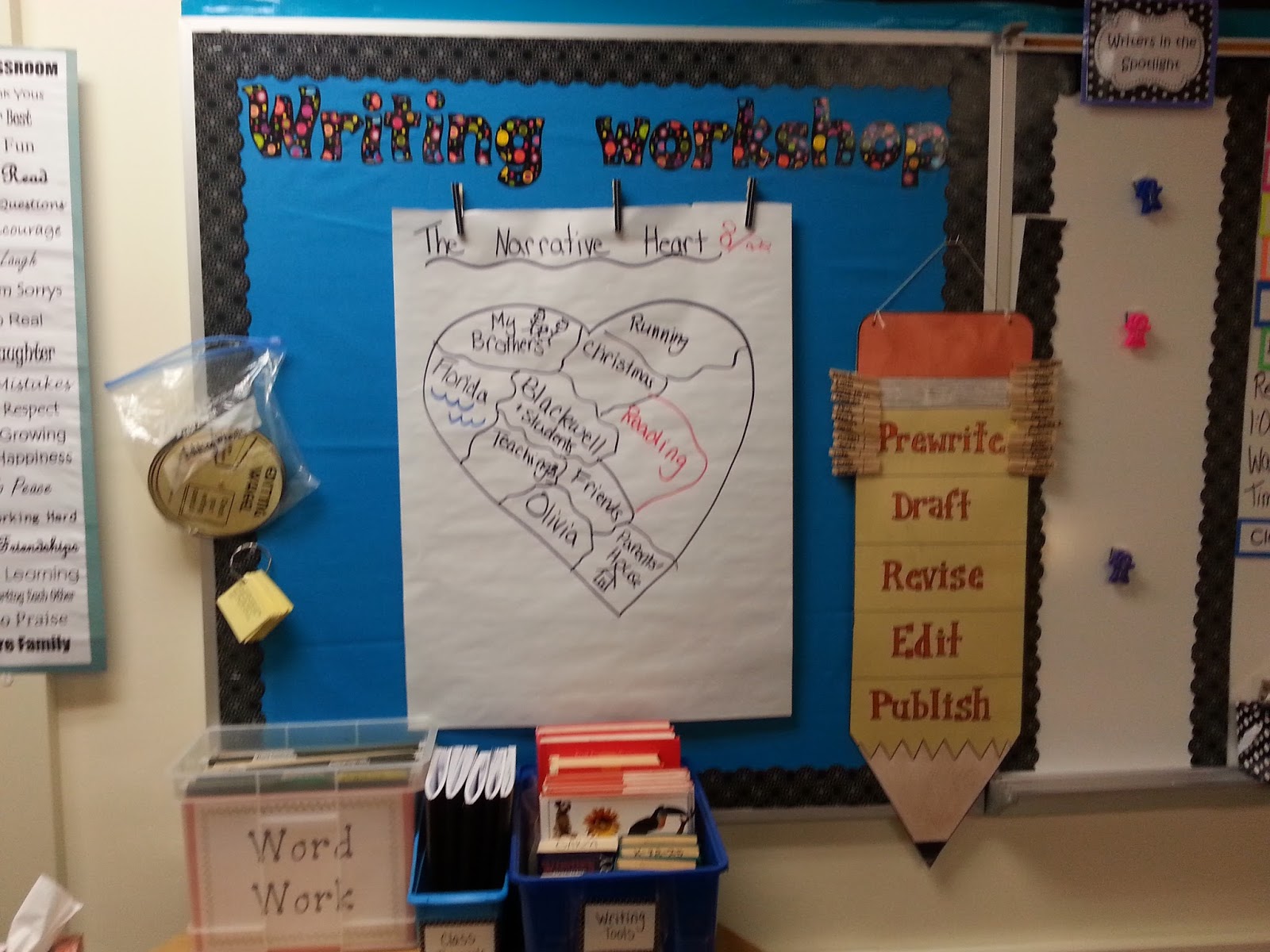
The first week, I also introduce our Writing Workshop routine.  This year, I read aloud The Best Story Ever as a perfect segue into the Narrative Heart lesson.  I'm sure many of you are familiar with this lesson--we draw hearts in our writing journals and fill them in with all of the people, places, activities, and memories that are in our hearts.  Then, I have students pick something from their heart to write about in their journal.  This lesson is a perfect starting point to writing workshop.  It gives students a place to draw ideas from for future lessons, and it also introduces the mini-lesson, writing time, sharing time structure of Writing Workshop.
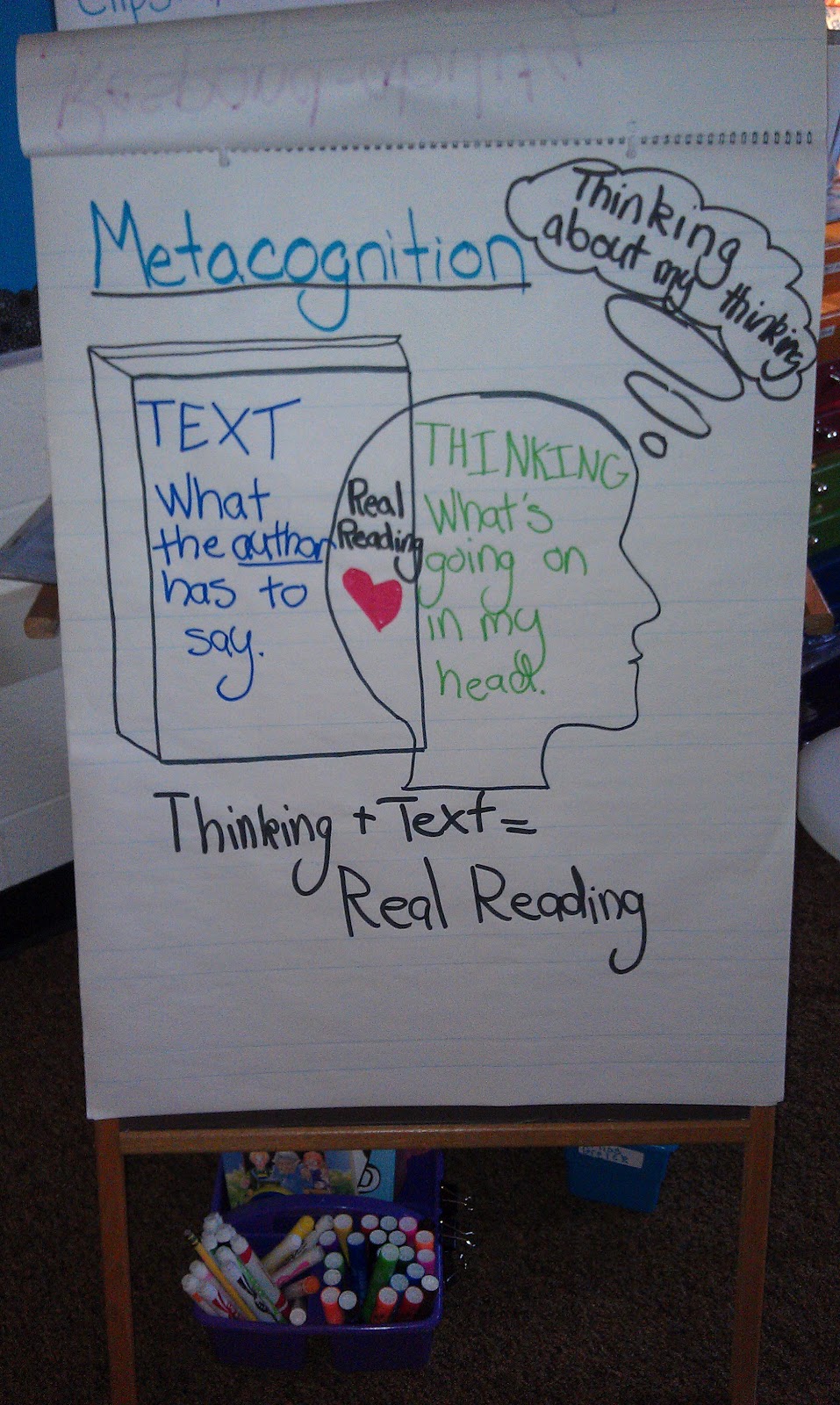
Before we start our literacy series, I like to also do some lessons about things that good readers do--visualizing, making connections, etc.  The first one I start with is a lesson on Metacognition that I got from the book Comprehension Connections.  I model reading a very challenging text and talk about how even though I was reading the words, I was actually "fake reading" because I wasn't thinking.  Then we practice think alouds while reading a picture book together.  This year, I chose The Boy who Grew Flowers.
Math
We will dive into our math curriculum starting week two (today actually!), but we did our first classroom switch for math on Friday.  I introduced expectations for this transition and our math opening routine (another song) to my math class, did my very best to learn a few names, and then started introducing them to the Guided Math routine.  Read more about how I run Guided Math here.  This year, I had the kids practice transitioning from desks to carpet with their white boards, markers, and erasers.  We also practiced turns and talks with the kids "Brain Buddies."  Once at the carpet, I shared our math expectations with the kids.  Normally I would make an anchor chart of these on chart paper, but I decided to make them in ActivInspire, our interactive board program, so I could try revealing them one at a time.  With the new emphasis on critical thinking and "rigor" in the Common Core, I wanted to make sure the kids understand what it means to justify their solutions and critique those of their neighbors.
After attending an awesome math workshop with Greg Tang last year, I decided to use one of his great online (free!) picture books, The Grapes of Math, as another part of our shared lesson.  This book does a great job of encouraging mathematicla thinking and showing that there are many ways to solve a problem.  Kids worked through the problems with their Brain Buddies and shared their solutions.
After reading a few pages from the book, I wanted to review a simple math game with the kids from our Everyday Math series to make sure that when we start our guided math groups on Monday, they will have an activity to work on when they are independent.  I reviewed the rules to Addition Top-It, a game frmo the third grade curriculum, and gave them time to play with their brain buddies.  Easy peasy!

What are some lessons you love teaching the first week of school?

January 8, 2012

Picture Book Review & Giveaway!

I'm excited to have the opportunity to review the book Spaghetti in a Hot Dog Bun: Having the Courage to Be Who You Are by Maria Dismondy, illustrated by Kimberly Shaw-Peterson.  Dismondy has this award-winning picture book and others, all focusing on the important messages of being yourself and standing up for what's right.  Read more about Dismondy and her books here.
 I think I loved this book at first sight, partly because I am passionate about peace and acceptance in the classroom (I even did my senior research project in college about building peace in the classroom), but also because the main character, Lucy, eats weird food and has out-of-control curly hair.  Sounds like a certain teacher-runner I know...(thank goodness for my CHI straightening iron...)

Spaghetti in a Hot Dog Bun is a sweet story about a little girl named Lucy whose grandfather teaches her that while everyone is different on the outside, we all have a heart and feelings on the inside.  Lucy is teased at school by a boy in her class, Ralph, for having poofy hair like a poodle and for eating spaghetti in a (you guessed it) hot dog bun for lunch.  One day, when Ralph gets himself stuck on the monkey bars, Lucy sees her opportunity to tease him right back, but, realizing how scared he is, she helps him instead.

Both Lucy and Ralph learn an important lesson in this book, and it would make the perfect read aloud in an elementary classroom to set the tone for the year, introduce conflict resolution strategies, or stop a bullying problem before it gets out of hand.  The story is simple and easy to understand, and the pictures are beautiful and full of color.  This picture book would best suit primary grade-aged kiddos.  A follow up activity in a first or second grade classroom might be for the kids to draw a picture and write a sentence about what makes them special and different from others, like Lucy is different because of her favorite foods and hair.  Even if you're not a teacher, this would be a great family read aloud and discuss starter!

Now, the best part--Maria Dismondy was kind enough to provide me with TWO copies of Spaghetti in a Hot Dog Bun, so I am giving one signed copy away to a reader!
Yikes!  Sorry about the awful glare!
To enter to win your very own copy of this special picture book, simply leave a comment below telling me why you'd like to win or what you'd like to do with this book.  Are you hoping to share it with your children?  Read it as part of a bullying lesson in your classroom?  I'd love to hear your thoughts and ideas!  This giveaway will end at midnight on Sunday, January 15th.  I will choose a winner using random.org and will post the winner the following morning.  Thanks for entering, and be sure to stop by Maria Dismondy's website!

Disclaimer: I was provided with one copy of the book to review and one to giveaway.  I was not asked to provide a specific opinion, and all thoughts expressed in this post are my own.

December 13, 2011

Teaching About Theme

Psst!  You can now download a *free* poster-version of this anchor chart!  Visit my Teachers Pay Teachers Store here! (edit 10.6.13)

A few weeks ago, we took a two-day break from our core literacy series to spend some time studying Author's Message/Theme.  I love working on theme with the kiddos, and REALLY love teaching literacy with picture books.  Theme + Picture Books = literacy fun.  :)  Here's what we did...

First, I introduced theme by reading aloud "The Boy Who Cried Wolf."  After reading we talked about the reason this story was first written: What was the author trying to teach readers?  What message was he or she trying to get across?  I like using "The Boy Who Cried Wolf" because the message is SO obvious, even the lower readers can catch it!  I then share this anchor chart with them and go over the common theme topics and sentence frames.  
Next, we read Chrysanthemum by Kevin Henkes.  I ask the students to listen for how Chrysanthemum changes and what she learns throughout the story.  We then mark the "common topics" on the chart paper using post-its, and I model using these topics to state the theme.  (We practice writing the theme as a complete sentence, not just a broad theme like "hope" or "friendship."  For example, the theme we developed for Chrysanthemum was, 'It's important to accept and celebrate who you are.'"  Note: It's important to clarify that the theme should not be specific to this book.  I try to be really clear that the theme of Chrysanthemum is NOT, "Unique names are special."  

After working with Chrysanthemum as a class, the kids broke up into small groups of 3-5 students.  Each group was given a picture book and a piece of chart paper with an outline on it.  They read the book, wrote a brief summary, then worked together to develop the theme.  Finally, they recorded it all on chart paper and shared with the class! 
This group read and responded to The Brand New Kid by Katie Couric--cute book!
Other great books for teaching theme:
  • Smoky Night by Eve Bunting
  • Terrible Things by Eve Bunting
  • A Bad Case of Stripes by David Shannon
  • Mr. Peabody's Apples by Madonna
  • The Wump World by Bill Peet
  • Thank You, Mr. Falker by Patricia Polacco
  • Weslandia by Paul Fleischman
  • The Frog Prince, Continued by Jon Scieszka

September 13, 2011

Easy Writing Workshop Mini-Lessons!

Have you entered my giveaway for Chocolate #9 energy gel?  Go! Go! Go!


It's been awhile since I professed my love for Writing Workshop, so I think it's about time for a post!  I'll admit that Writing Workshop isn't going as smoothly in my class this year as last year, but I know every group of kiddos is different so I am trying to find a balance between patiently reteaching and in some cases adjusting my expectations.  This year I have a squirrely group, but I also have the IEP inclusion cluster--in other words, several of my kiddos either cannot focus long enough for 20 minutes of independent writing or just plain don't have the skills to write for 20 minutes without 1 on 1 assistance!  All of that aside, we have been making progress and working hard the past few weeks to lay that foundation that is critical for Writing Workshop.  I've been doing "ideas" lessons like crazy to get my kiddos writing about things they're interested in. Here are two that I especially love...

Quick Writes
This mini-lesson is perfect for when you're pressed for time and only have a few minutes to spend on the lesson portion of the writing block.  I start by setting the expectations for Quick Writes: Everybody writing as a group, 1-2 minutes, write the whole time without stopping.  I tell the kids that no matter what, we keep our pencils moving on our papers--the ideas will come if we keep going!  Then I give a few different prompts 1 at a time.  In the past, I've shown one and then immediately had the kids write about it, then shown another and followed with another quick write, etc.  At the end, I'd tell the kids to choose one of their quick writes to continue working on.  Last week I showed the prompts one at a time (slowly, pausing in between) and then told the kids to pick one to write about during our quick write.  <--I think this was a better fit for my current group of kids, as they would have been overwhelmed by several quick writes in a row whereas last year's group did great with it.
During the quick write, I ALWAYS write too.  I'll talk with the kids after about my own quick write experience, and ask them to reflect.  I'll ask, "How did it feel to write without stopping?  Did anyone get stuck?  Did anyone have ideas come to them when they just kept writing?" etc.  After the mini-lesson portion is over, I'll send the kids to their spots for the "writing time," and tell them to continue their quick write or work on another piece.  I use quick writes periodically throughout the year.  Sometimes I'll pause during a mentor text read aloud and do a quick write asking the kids to finish the story with what they think will happen.  Other times I'll give more free-thinking questions similar to those shown above.  I love how versatile this mini-lesson is!

Mentor Text: Thank You, Mr. Falker

If you haven't read Patricia Polacco's Thank You, Mr. Falker yet, drop everything and get yourself to your nearest bookstore.  You may need kleenex.  This is seriously one of my all-time favorite books, and it makes a perfect writing workshop mentor text for early in the year. 
In this beautiful book, main character Tricia (based on the author's own experiences!) struggles her entire childhood with reading and math.  Every year in school she watches the other kids advance in their readers and yet she still cannot make sense of the letters and numbers on the page.  Tricia is terribly bullied and just plain miserable.  I get choked up every time I read it aloud.

Don't worry, the story has a happy ending, but as part of a mini-lesson, I pause on a particularly intense page that shows Tricia crying with the cruel words of bullies hanging in the air around her.  I get really serious and talk with the kids about how they think Tricia feels and how this page makes them feel.  Then I tell them about how when I was young math was really hard for me.  I tell them that sometimes I even thought I was dumb or that I could never learn math.  Then I talk about how we all have had times where we felt like Tricia.  Maybe we struggled in school and were embarrassed.  Maybe we weren't good at something in sports and were teased.  Maybe we didn't fit in because of our clothes.  I ask them to write about a time they felt like Tricia.  Some of the stories they tell are beautiful.

Do you have any favorite Writing Workshop Mini-Lessons?

Missed some of my other Writing Workshop Mini-Lesson posts?

July 3, 2011

I Believe in Picture Books: Differences and Being Yourself

I. love. picture books.  Read my declaration of love to the wonderful world of picture books *here*.  As you have probably noticed from the header of my blog, I also teach big kids.  (Well, big for elementary school!)  If you are not the picture book enthusist that I am, you might be wondering what value there could be in reading books meant for young children to intermediate grade students.  Well, there is a LOT of value.   I love sharing picture books with powerful themes with my students, and here are a few of my favorites that focus on the important thing of embracing differences and being yourself.

 A Bad Case of Stripes (David Shannon)
 This book is silly in all of the right ways.  Its main character is more concerned with fitting in than staying true to herself and consequently comes down with a “disease” that not only makes her skin appear striped, but also causes her to change her appearance based on what other people say about her.  The only cure?  Eating her favorite food, lima beans, even though she knows others may mock her for it.  While this book just scratches the surface of the importance of being yourself no matter what others think, it makes a great “beginning of the year” read and never fails to stimulate a good discussion.


Tacky the Penguin (Helen Lester)
Tacky is different than the other penguins…he wears bright clothing, greets his friends with a loud “What’s happening?,” and prefers cannon balls to graceful dives.  To say he doesn’t fit in is an understatement, until one day hunters come to the penguins’ home.  When the other penguins hide in fear, Tacky bravely faces them head-on, using his unique mannerisms to confuse the hunters and eventually scare them away.  This book does a beautiful job of using humor to teach that differences are what make us special.  It also lends itself well to opening a conversation with kids about the strengths that our uniquenesses bring us, and why all different people are important members of the community.

Thank You Mr. Falker (Patricia Polacco)
I fell in love with this book when an ed professor read it aloud to our class in college.  It is a powerful (not to mention true!!) story that beautifully illustrates the different ways in which kids learn and the difference one teacher can make in your life.  ‘Tricia slips through the cracks in school year after year until one teacher, finally realizing that she can’t read, goes above and beyond to truly help her.  I get choked up every time I read this book!  When I share this with my students, we talk about the different talents and gifts we all bring to the classroom, and how we all learn in different ways.  Like most of Polacco's books, this story is one that can be enjoyed by young children, but also packs a powerful message for older kids just starting to figure out who they are.

 Weslandia (Paul Fleischman)
 For any kid or adult who has ever felt “different,” this book is for you.  Weslandia’s protagonist, Wesley, would prefer reading and inventing over sports and is bullied by the other neighborhood kids.  Undeterred, he decides to use his summer to start his own civilization.  Wesley is an example of the importance of staying true to oneself, showing how sometimes the unpopular, “out there” kids are the ones who can have the most influence on society.  This book not only lends itself well to a study of theme and a discussion about the qualities that make us all unique, but would be a great intro to a conversation about real-life examples of “square pegs in round holes” who have had great influence in the world like Bill Gates, Albert Einstein, or even a personal favorite, Temple Grandin.

images source

June 28, 2011

I Believe in Picture Books

I have many MANY passions in teaching and in life, but one of the biggest of these is picture books.  I read them constantly to my class, browse them at the book store, and there have been several occassions when I have found myself wandering into the picture book section of the library and standing in the (low, child-sized) stacks reading Eve Bunting or Patricia Polacco (and, let's be honest, occasionally shedding a tear or two...).  I teach big kids, 5th graders to be exact, but I read picture books to my students anyways.  Here's why...


Top 5 Reasons I Believe in the Power of Picture Books

~Picture books  teach important lessons and help my kids think BEYOND the obvious.
I love sharing a book with the kids that they have read before in an earlier grade and asking them to look at the story with a new perspective.  They may remember hearing the story as a first or second grader, but it is amazing to see the wheels turn in their heads as they think about complex topics like tone, theme, and character motives.  Also, while it's my job to teach kids to read and write and add and multiply, it's also part of my job to prepare my students for LIFE.  That definitely goes beyond the core curriculum.  When we need to tackle an important issue like gossip or bullying or caring for the Earth, a picture book goes a long way to start the discussion and to get their wheels turning.  Some of our most powerful conversations were after reading texts like The Giving Tree and The Lorax.


~Picture books help my kids LOVE READING.
Picture books can be just plain fun.  Silly, sweet, or serious, picture books might be the hook you need to grab kids who might otherwise not be reading.  Of course they are not the ONLY hook out there, but visiting favorite picture books can be a safe way to get kids STARTED on their reading journey.  Also, by sharing picture books with ALL of my students, it helps reluctant and emergent readers feel comfortable reading them when they might otherwise have been embarrassed to be seen with a picture book.  Reading picture books to the class sends the message that they are NOT babyish; they are for EVERYBODY to enjoy.


~Picture books make big, complex ideas like history and world issues accessible to kids.
I am constantly in search of picture books that pair with science and social studies units to intersperse with our text book reading.  They do a great job of helping kids understand the content at their level, especially if the characters in the book are also children.  I also find that the kids tend to more easily remember the content they learned in the picture book than the text book, and use that story to make connections to the topic of study.  Plus, they're a nice change of pace!


~Picture books help students grow as writers.
I love using picture books as mentor texts during my writing workshop.  Sharing part of a picture book gives students a quick example of "good writing" that can spark their own creative writing processes.  While chapter books can of course make great mentor texts, I find that the picture book is less intimidating.  They are short and accessible, but still model the writing techniques we work on with our students like description, dialogue, onomatopoeia, point of view, and many other things.  I have found so much success in using picture books in writing workshop, and our picture book mini-lessons have been some of the students' favorites.


~Picture books keep my kids KIDS.
My students all act like they are 10 going on 18, which is probably NOT the best thing for kids.  During the school day, I look for little ways I can keep them from growing up too fast--ways I can keep them KIDS.  Gathering on the carpet and listening to a picture book is one of my favorite ways.  For those 10-15 minutes, they are not thinking about MTV or Jersey Shore or Grand Theft Auto or whatever other inappropriate media they spend time with outside of school.  They are just kids, taking in, processing, and (most importantly) enjoying a story.


This is the first in a series of posts I am working on about using picture books in the intermediate classroom.  I would love to hear suggestions of favorite picture books that you use in your classrooms.  Thanks!
Related Posts Plugin for WordPress, Blogger...